
Athletes
Recruiting Resources
Do You Have What It Takes to Play in College?
Evaluate your abilities honestly. Start by speaking with your high school, club, or individual coach. Ask about your strengths, areas for improvement, and the levels of college competition you should explore. Encourage honest feedback rather than looking only for reassurance.
Start the College Recruiting Process Early
Why Choose USA Recruiting?
Rules of the NCAA, NAIA, and NJCAA
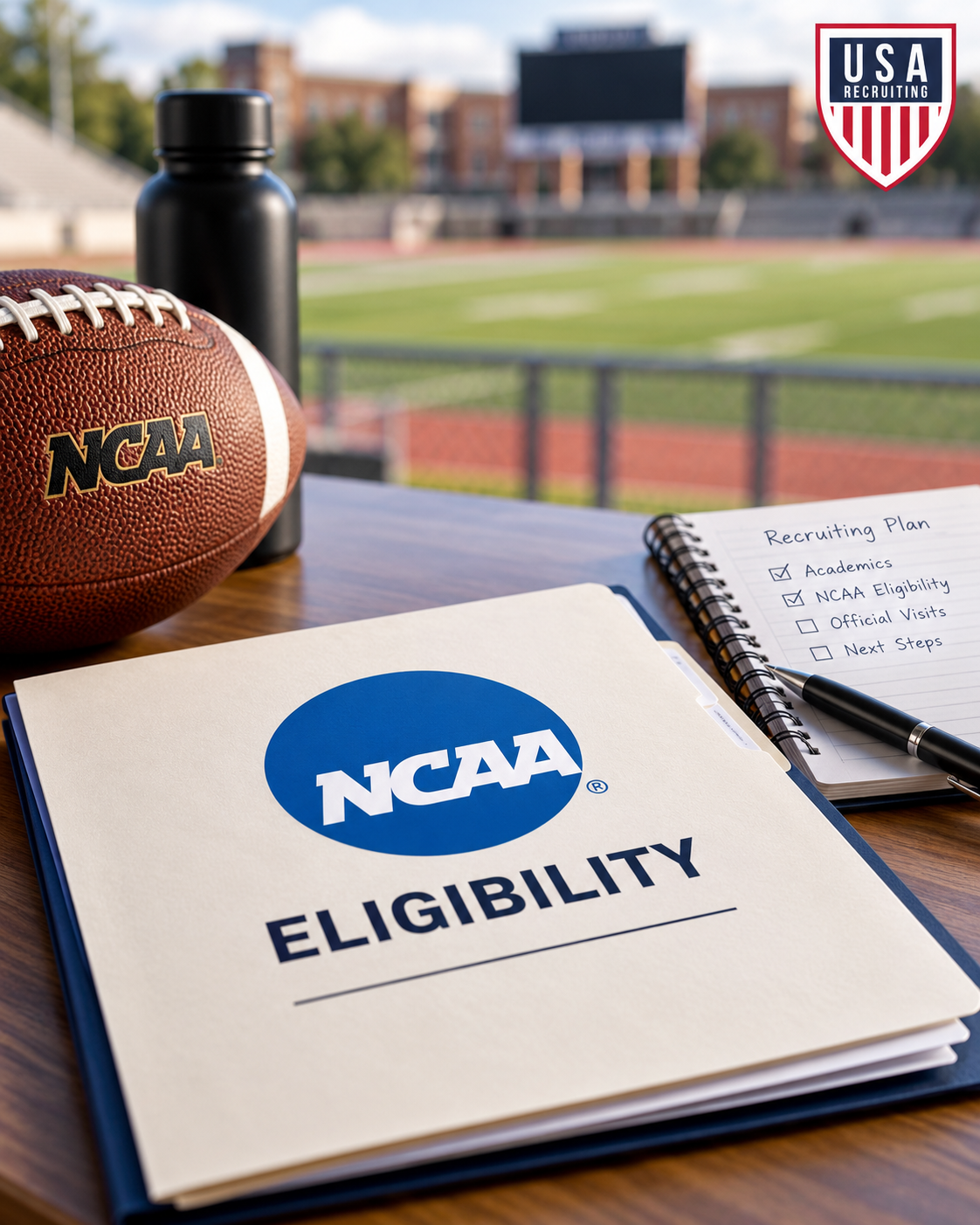
Rules of the NCAA, NAIA, and NJCAA
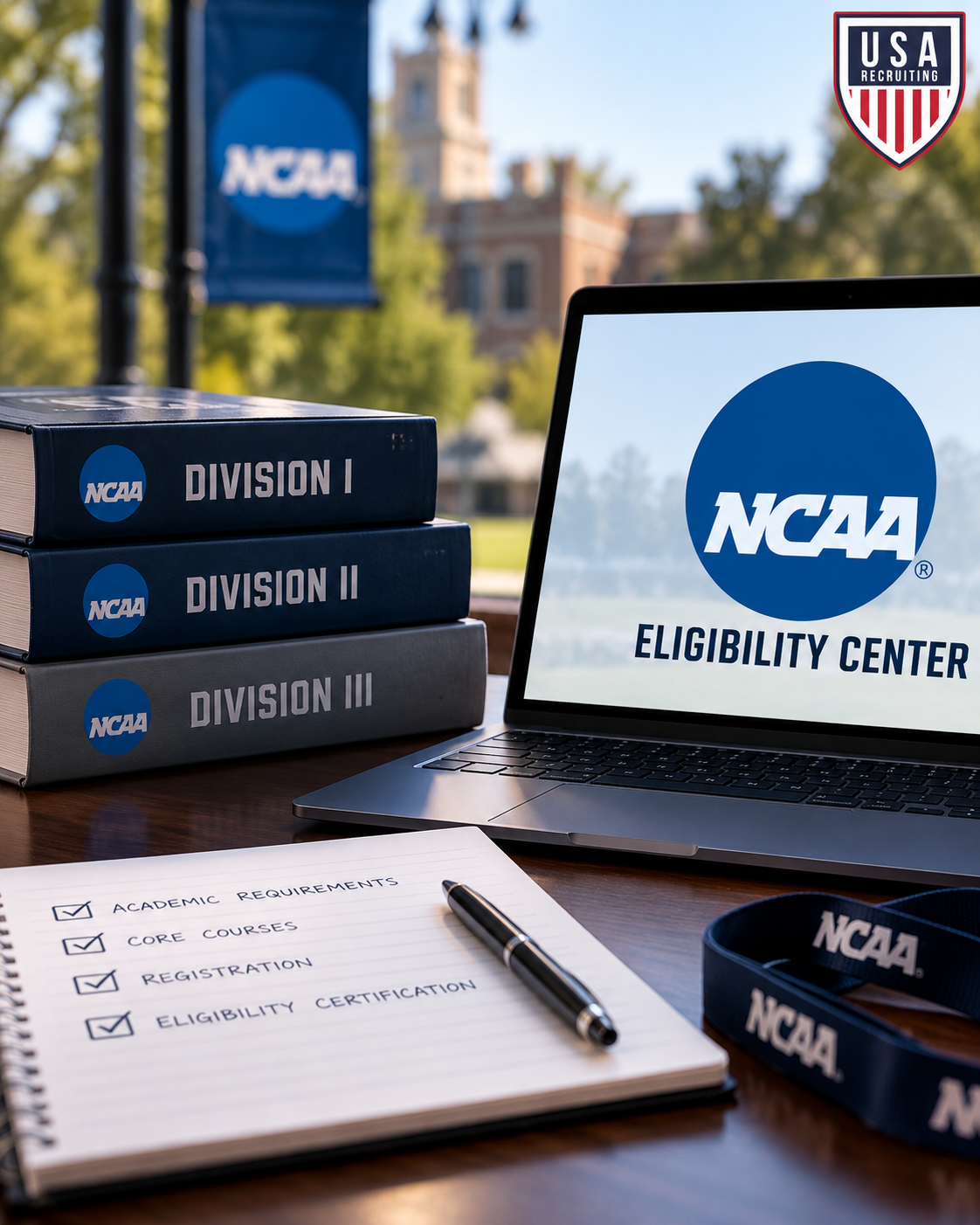
- Register for eligibility certification. Prospective Division I and II athletes generally need an Academic and Athletics Certification account with the NCAA Eligibility Center. International Division III athletes need athletics certification.
- Meet academic requirements. The standard Division I and II pathways require high school graduation and 16 NCAA-approved core-course credits. The minimum core-course GPA is 2.3 for Division I and 2.2 for Division II. Course subjects and completion requirements also apply..
- Follow Division I course timing requirements. Generally, 10 of the 16 required core-course credits must be completed before senior year, including seven in English, math, or science. Certain international academic credentials are treated differently.
- Meet the college’s admissions requirements. NCAA eligibility does not guarantee admission. Division III schools establish their own academic admission standards.
- Follow recruiting calendars and communication rules. Dates for coach contact, evaluations, and visits depend on the sport and division. A dead period restricts in-person recruiting; a recruiting shutdown also prohibits recruiting calls and correspondence.
- Understand scholarship restrictions. Division I and II schools may award athletic scholarships. Division III schools cannot, although academic and need-based assistance may be available.
- Complete the applicable transfer process. Before contacting other programs, confirm whether notification, Transfer Portal entry, or permission to contact is required. Transferring does not automatically establish eligibility at the new school.
- Register through Play NAIA. Students competing in the NAIA for the first time must complete the applicable NAIA Eligibility Center review. NCAA certification does not replace it.
- Meet freshman academic requirements. One standard pathway for U.S. high school graduates is a final GPA of 2.3 or higher . An alternative pathway combines two qualifying measures involving GPA, class rank, and ACT or SAT scores. International and other educational backgrounds require the appropriate review.
- Meet college admission standards. Student athletes must satisfy the institution’s admissions requirements as well as NAIA eligibility requirements.
- Maintain enrollment and academic progress. Athletes generally must enroll in at least 12 credit hours per term and meet continuing eligibility requirements, including academic progress toward a degree.
- Understand recruiting communication rules. High school recruits can communicate directly with NAIA coaches without NCAA-style recruiting calendar restrictions. Separate notification requirements apply to certain transfers.
- Follow financial aid limits. Schools determine individual athletic awards within NAIA limits and their available funding. An athlete is not automatically entitled to a full scholarship.
- Have the college confirm your eligibility. Provide the academic and participation records requested by the school’s athletics staff. Admission alone does not establish athletic eligibility.
- Maintain full-time enrollment. Student athletes generally must remain enrolled in at least 12 credit hours during their competitive season and satisfy academic progress requirements.
- Stay within participation limits. Athletes generally have two seasons of competition in an NJCAA sport. Previous college participation can affect the eligibility remaining.
- Understand Division I scholarships. Athletic aid may cover permitted expenses including tuition, fees, books, room, and board. Programs are not required to provide every athlete with full funding.
- Understand Division II and III scholarships. Division II athletic scholarships may cover tuition, fees, books, and permitted course supplies, but not room and board. Division III programs cannot award athletic scholarships.
- Disclose previous college attendance. Transfer students must complete the required transfer documentation and have their eligibility reviewed before competing. Before making a commitment, confirm the current requirements with the college’s compliance or eligibility staff.
You do not want to be the player that misses out on the deserved opportunity to experience the academic, athletic and, social advantages of being a collegiate student athlete. In order for you to be successful, you must proactively reach out to college coaches. At Ultimate Student Athlete Recruiting we are here to simplify, guide, and assist you in opening this line of communication in order to complete the college recruiting process successfully. We know what it takes to be triumphant in the recruiting process for student-athletes.
At Ultimate Student Athlete Recruiting, we will put a marketing plan together for your student-athlete to maximize his/her exposure with college coaches. We do NOT want your son or daughter to go unnoticed. We DO want your son or daughter to have the opportunity to play collegiate sports.
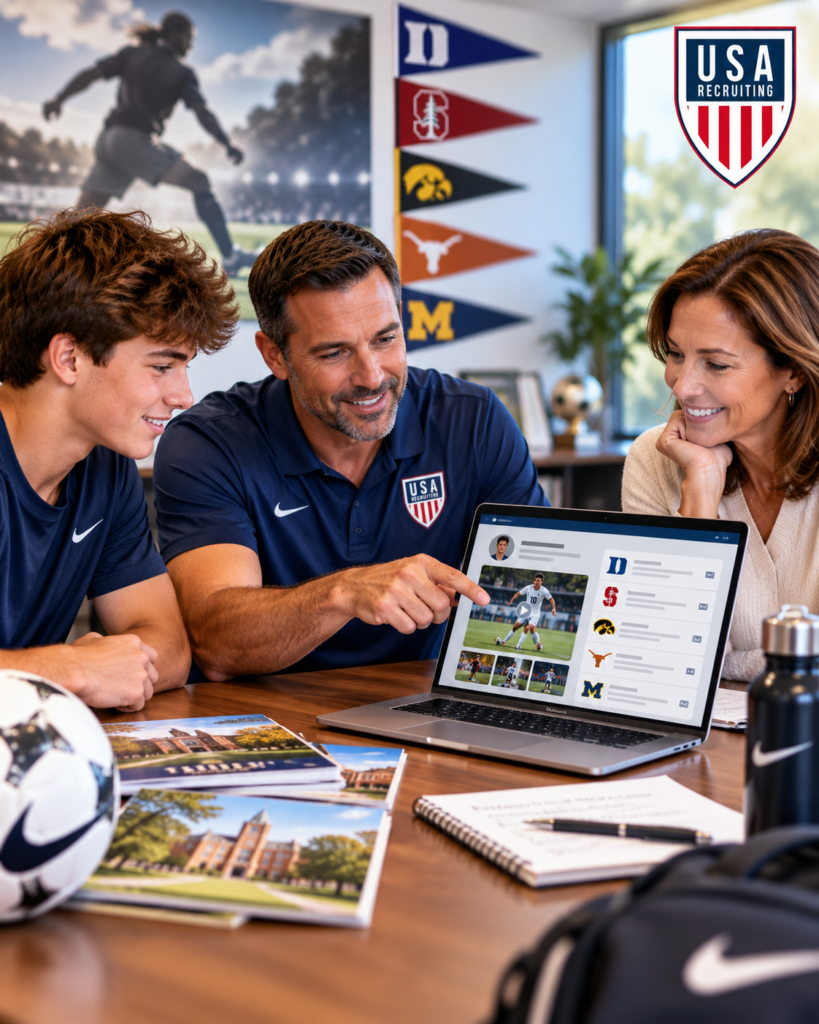

Another college coach explained that playing time is something that is earned, not given. “This is something coaches won’t guarantee unless you are a priority recruit for that school and/or a position of need for the team. With that being said, you shouldn’t cross that school off your list if you are not guaranteed a starting role. If you believe you are going to a program that best fits your skill set, are willing to compete to play and believe that the school is a good fit academically, then you are putting yourself in a position for long term success.”
Education is very important to a number of players and yet not as important to others. Some players believe that they want to go to the highest academic institution possible, while others ignore academics and focus only on athletics. Many athletes are more interested in the soccer program than the academic curriculum; therefore, these athletes don’t place much emphasis on education. Players also admit they looked at schools that possessed their intended major, while some disregarded this factor. Education should be a major factor! One athlete admits to having a full ride to a University; however, chose to attend a more academically challenging institution because she believed a degree from a prestigious university would help her compete in the business world. Don’t forget about academics!
We asked a number of college coaches their opinions about college camps, combines, tournaments, college showcases, and high school games – and more particularly, if college coaches attended these events with the hopes of discovering a player. One college coach (which seemed to be the consensus among most college coaches) said: “Most college coaches will not come to a game or tournament with the hopes of discovering a player, but that does happen. Coaches will come most often to watch a player they already know, and sometimes if someone stands out while the coach is present, then the athlete may get put on the coach’s radar.” He continued, “College coaches look for players in many different events. For the most part, Division I coaches spend a lot of time at showcase events and tournaments because they can see a lot of players all at the same place competing against high-level competition. Many Division II and III coaches find recruits at similar events, but also find players at summer camps as well. Local and small colleges will spend a lot of time at high school games in their local area. Another college coach explained, “Most coaches go with a list of players they are looking to recruit and it is up to the recruit to contact the coaches to show that they are interested in that college and athletic program.” It is up to you to have credible and reliable people providing information about you to the college coaches.
Another college coach added, “Any time you are competing, you are potentially being watched. Maybe not by a coach directly, but a lot of coaches find out from word of mouth of friends, alumni, current players, other coaches about potential athletes.”
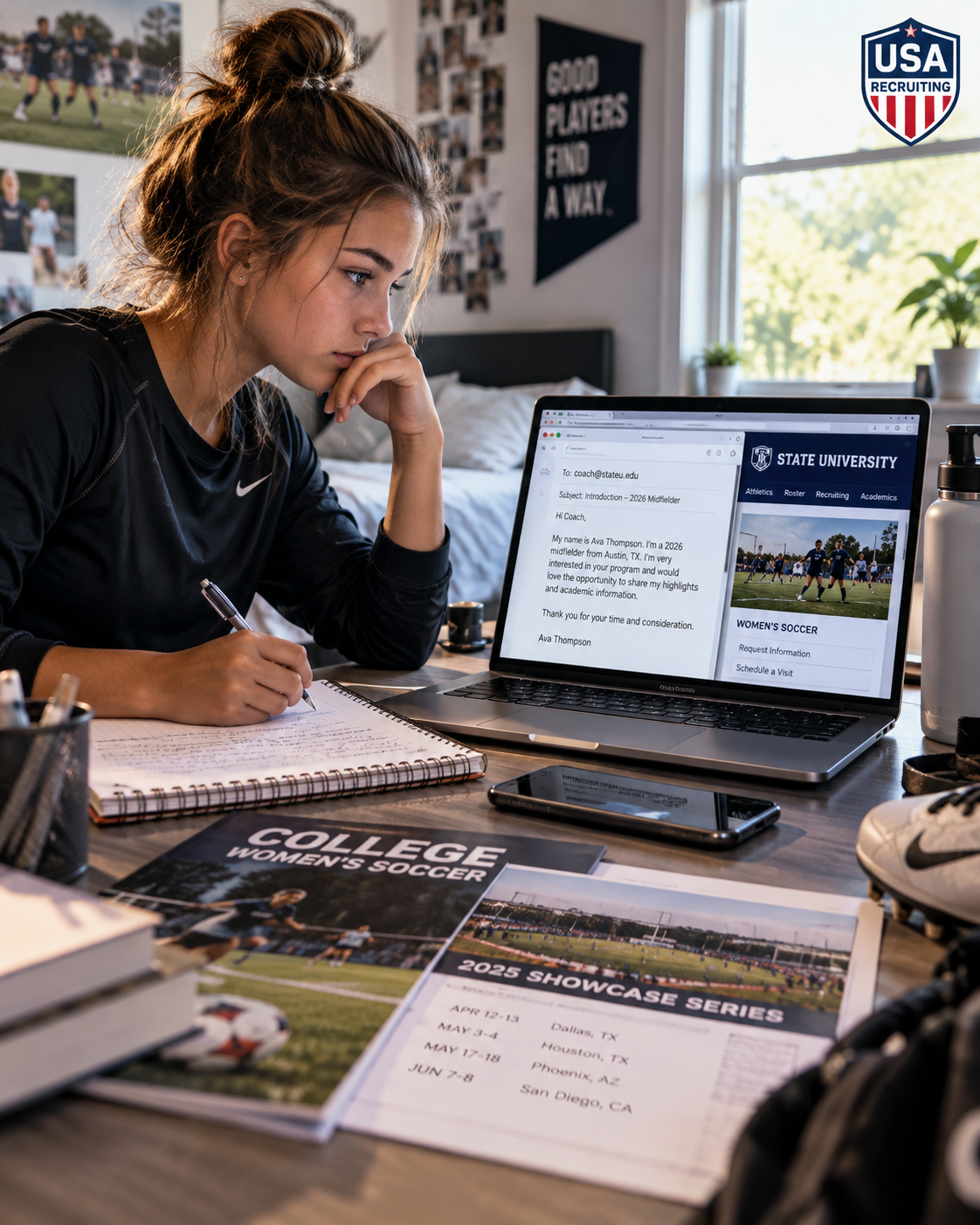

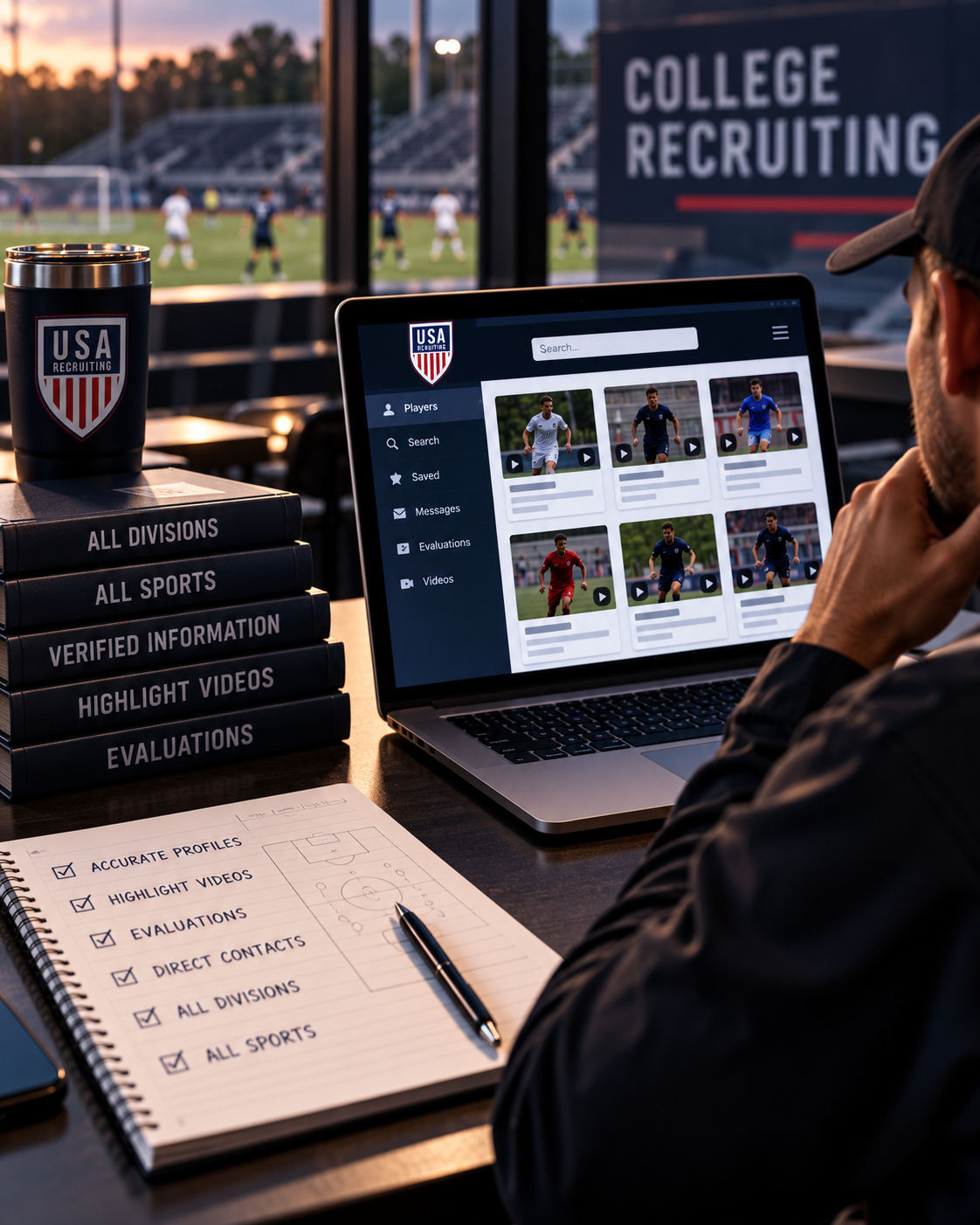
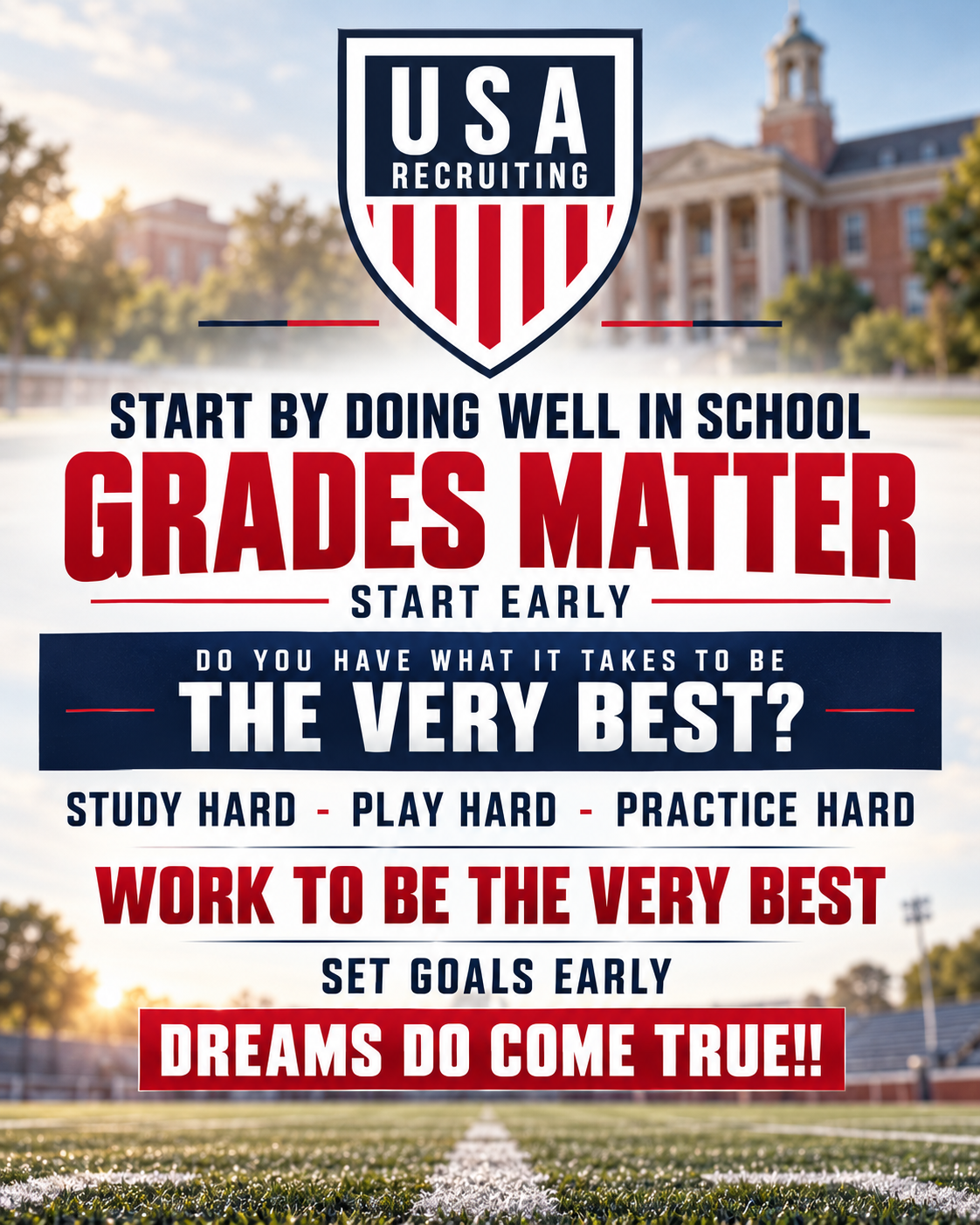
START BY DOING WELL IN SCHOOL
GRADES MATTER
START EARLY
DO YOU HAVE WHAT IT TAKES TO BE THE VERY BEST?
STUDY HARD – PLAY HARD – PRACTICE HARD
WORK TO BE THE VERY BEST
SET GOALS EARLY
DREAMS DO COME TRUE!!

- NIL allows student athletes to earn compensation for the commercial use of their name, image, or likeness.
- Compensation can include money, products, or services.
- Opportunities may include sponsored social media posts, endorsements, autograph signings, appearances, and camps or clinics.
- Athletes across NCAA Divisions I, II, and III can pursue permitted NIL opportunities.
- Athletes must follow the requirements for their division, applicable laws, and school policies.
- Payment must be connected to a defined NIL activity, such as advertising or an appearance.
- Deals must serve a legitimate business purpose, with compensation reasonably comparable to similar arrangements.
- Third-party NIL cannot simply pay an athlete to attend a particular school or reward athletic participation or performance.
- Payment without a defined activity or plan for using the athlete’s NIL is not permitted.
- Report third-party NIL agreements worth $600 or more through NIL Go , the College Sports Commission’s reporting platform.
- Multiple payments or agreements with the same or substantially the same payer count together toward the $600 threshold.
- Enrolled Division I athletes generally must report agreements within five business days of signing or agreeing to payment terms.
- These reporting requirements apply even if the Division I school does not provide settlement-related athlete payments.
- High school recruits planning to compete in Division I must report qualifying deals dating from July 1, 2025, or the start of their junior year—whichever is later.
- The reporting deadline is within 14 days of starting full-time classes or before their first Division I competition, whichever comes first.
- Separate reporting instructions apply to junior college recruits and transfers.
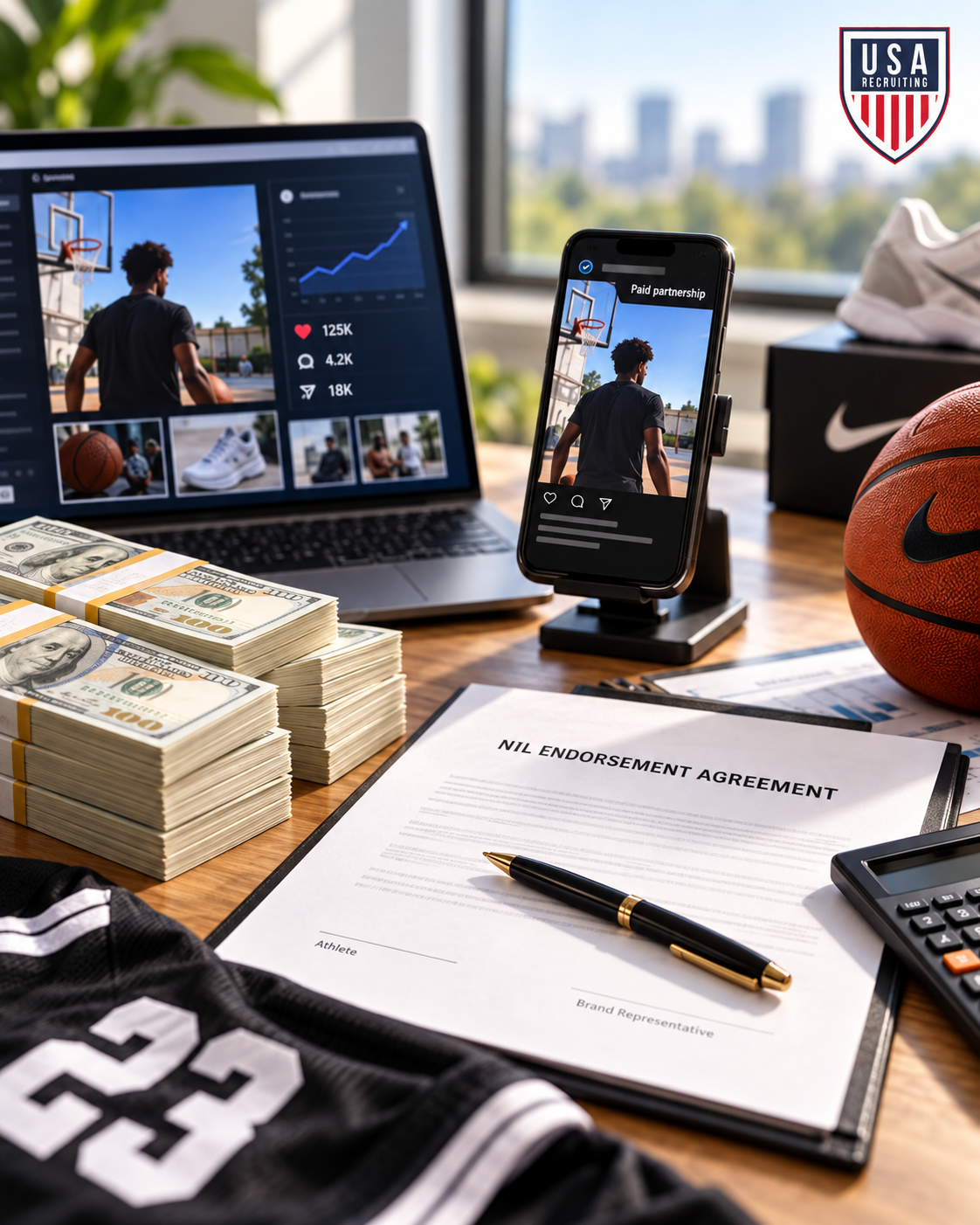
- Athletes may use an agent or marketing professional to help with NIL opportunities.
- Before signing, review your required activities, payment terms, contract length, cancellation provisions, and any representative’s fees.
- NIL earnings are generally taxable.
- Keep contracts and records of compensation, expenses, and completed activities.
- Ask your school’s compliance office about reporting and policy requirements before entering a deal.