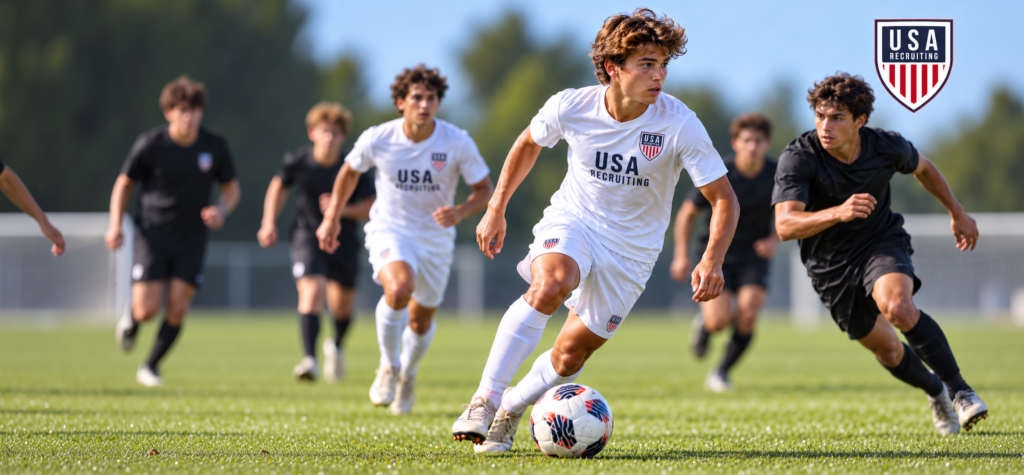
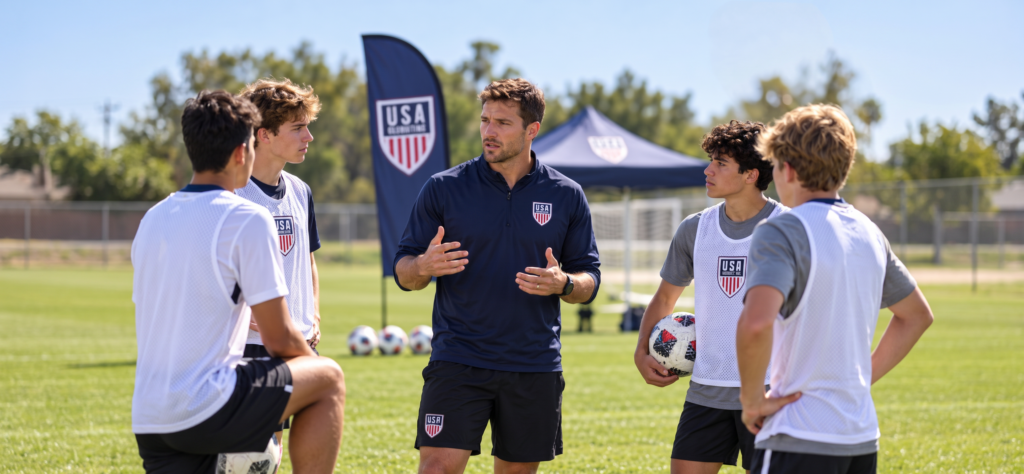
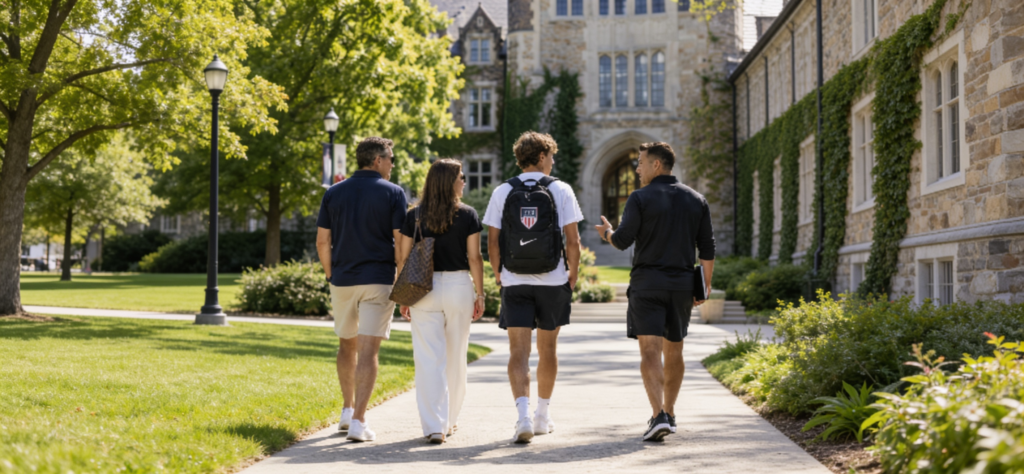
Many soccer players have the dream to play soccer at the collegiate level but never get the opportunity. The college recruiting process can be competitive and confusing. Many qualified student-athletes go unnoticed simply because they aren’t connecting with the right coaches at the right schools.
Sometimes, a player has their sights set on a college that isn’t recruiting them. Other times, a coach may be interested in a player who has little interest in that particular school. Finding the right fit requires more than talent — it requires a proactive and strategic approach to recruiting.
At Ultimate Student Athlete Recruiting, our goal is to make that process simpler. We help student-athletes identify the right college opportunities, connect with appropriate coaches, and maximize their exposure throughout the recruiting process. Through our network of college coaches, being in the recruiting scene for over 18 years and our player evaluation, we will help you create a marketing plan that will maximize your exposure.
We don’t want your son or daughter to go unnoticed. We want them to have every opportunity to find the right college soccer program and achieve their goal of playing at the next level.
How To Get Recruited
Four steps to exposure
Build Your Soccer Recruiting Plan
01
Develop a plan to maximize your exposure with college soccer coaches.
Work with someone who has experience with the college soccer recruiting process and can be objective about your son/daughter.
At Ultimate Student Athlete Recruiting, we develop a marketing plan to help you find the right academic and soccer matches.
Understand What College Soccer Coaches Are Looking For
02
We get to know you and what you are looking for in a college and soccer program.
We know what colleges and soccer coaches are looking for in their recruits.
We regularly communicate with college soccer coaches to better help you find the right fit and increase your exposure.
Gather Important College Soccer Information
03
We gather information on each university and its soccer program.
We speak with coaches about available soccer scholarships, financial aid, and academic requirements.
We gather information on a regular basis to help each soccer recruit.
Get Your Name in Front of College Coaches
04
Most college soccer coaches will not look at you until they
hear from you.
You need to let coaches know you are interested by contacting them and providing the information they need.
At Ultimate Student Athlete Recruiting, we know what most colleges and soccer coaches are looking for in their recruits.
Recruiting Rules & Calendar
Unlock full athletic potential with expert coaching tailored to your goals
Freshman
Build the foundation
Start gathering film
Start learning about the recruiting process
Focus on academics
Important Date
June 15th after Sophomore Year: D1 and D2 schools are allowed to make direct contact such as calls, emails and texts as well as make verbal offers
Sophomore
Build the foundation
Gather film and highlights
Email coaches
Attend ID camps, showcases, recruiting events
Start building a list of colleges
Important Date
June 15th after Sophomore year: D1 and D2 schools are allowed to make direct contact such as calls, emails and texts as well as make verbal offers
Junior
Build the foundation
Continue building a list of schools
Email and communicate with coaches providing them information like schedules and how the season is going
Update highlight video and gather full game film
Attend ID camps and showcases
Visit schools
Make sure you are NCAA eligible and on track with academic requirements
Important Date
August 1st before Junior year: Athletes are allowed to begin taking official and unofficial visits with off-campus contact allowed
Senior
Build the foundation
Continue communication with coaches
Update film and highlight videos
Attend camps and visit schools
Complete college applications and eligibility requirements
Contact happens when a college coach says more than hello during a face-to-face meeting with you or your parents off campus
EVALUATION
An evaluation happens when a college coach watches you practice or compete.
VERBAL COMMITMENT
A verbal commitment happens when you verbally agree to play sports for a college before signing or being eligible to sign. It is not binding for you or the school.
OFFICIAL VISIT
A visit to a college or university campus that is paid for by the school. This may include certain expenses for the prospective student-athlete and their family.
UNOFFICIAL VISIT
A campus visit paid for by the prospective student-athlete or their family.
Head to NCAA terms under recruiting info for more terms.
Timing Matters
Recruiting Periods
CONTACT PERIOD
A coach may have face-to-face contact with you or your parents, watch you compete, visit your high school and write or call you
EVALUATION PERIOD
A coach may watch you compete, visit your high school and write or call you, but may not have off-campus face-to-face contact with you or your parents.
QUIET PERIOD
A coach may not have face-to-face contact with you or your parents off campus and may not watch you compete or visit your high school. Coaches may still write or call.
DEAD PERIOD
A coach may not have face-to-face contact with you or your parents and may not watch you compete or visit your high school. Coaches may still write or call.
Money Talk
Soccer Scholarships
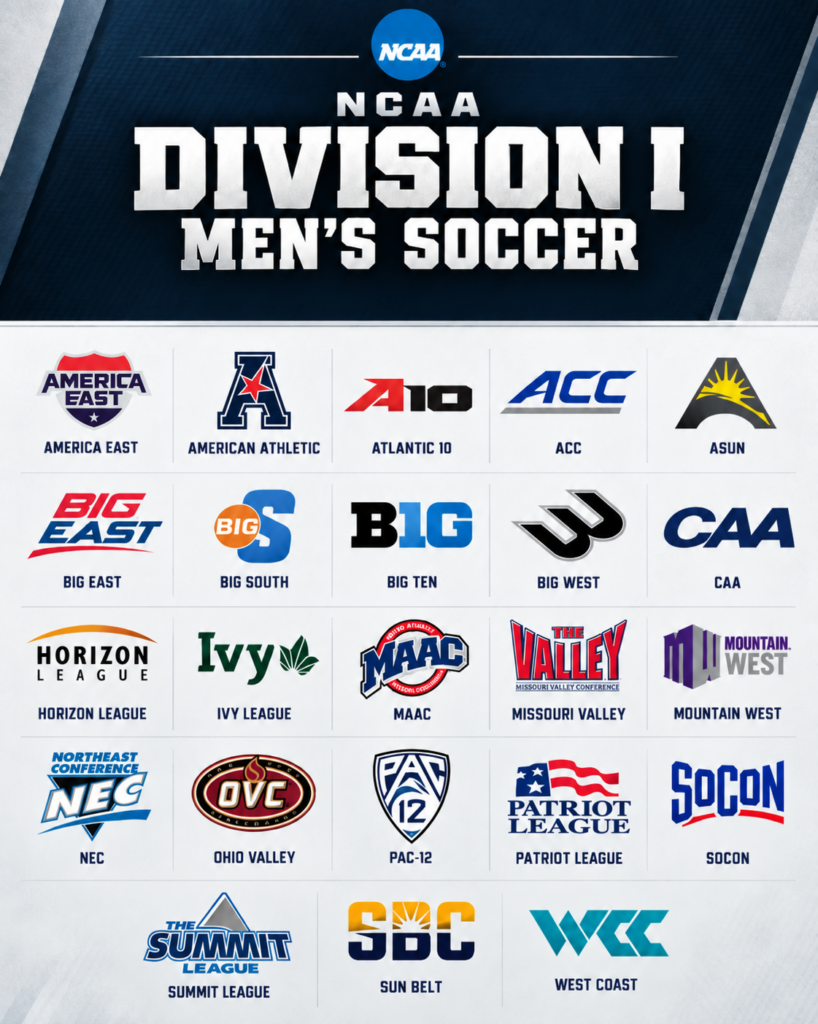
division 1
Up to 28
Scholarships allowed, although it varies by school, budget and league.
Scholarships can vary from academic scholarships, need-based aid or other forms of financial aid.
Full-ride scholarships are rare in men’s soccer; most programs distribute partial packages supported by academic aid.
Once you sign an athletics aid agreement, a contact prohibition begins. Coaches from other NCAA schools that offer athletics scholarships must stop recruiting you and people connected to you, including family members, coaches, advisors or other members of your support system.
DIVISION II
Up To 9
Full scholarships per school, usually distributed as partial packages throughout the roster.
Men’s soccer scholarships are equivalency awards, meaning coaches receive a pool of financial aid to split across their roster.
When you sign a Division II or II athletics aid agreement, the school agrees to provide athletics aid if you are admitted, remain eligible and meet the terms of your agreement.
DIVISION III
No athletic aid
D3 schools do not give athletic scholarships but may offer merit scholarships and academic financial aid.
D3 schools do not give athletic scholarships but may offer merit scholarships and academic financial aid.
When you sign a Division II or II athletics aid agreement, the school agrees to provide athletics aid if you are admitted, remain eligible and meet the terms of your agreement.
IMPORTANT REMINDER
Always review the specific scholarship details with the schools you’re interested in and understand NCAA rules before signing any agreement.
By providing your contact information and clicking “Get Started”, you give your consent to receive calls, emails, newsletters, and texts from USA Recruiting, Ultimate Student Athlete Recruiting and any of its affiliates to your provided number and email with reminders and other information about our services, including our available packages. Consent is not a condition of purchase and you can opt out from our text, phone, and email communications at any time. Standard rates apply.
GET STARTED FOR FREE
Parent Information
By providing your contact information and clicking “Get Started”, you give your consent to receive calls, emails, newsletters, and texts from USA Recruiting, Ultimate Student Athlete Recruiting and any of its affiliates to your provided number and email with reminders and other information about our services, including our available packages. Consent is not a condition of purchase and you can opt out from our text, phone, and email communications at any time. Standard rates apply.